Description
What is Thai Glutinous Rice and How Is It Different from Regular Rice?
The Science of Stickiness – Amylopectin vs. Amylose
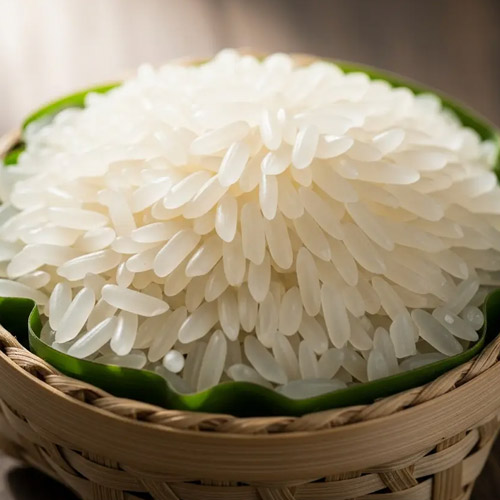
The defining characteristic of glutinous rice is its starch composition. All rice starch is made up of two glucose polymers: amylose (straight chains) and amylopectin (highly branched chains). In regular non-glutinous rice varieties, amylose content ranges from 20-30%, and these linear chains keep cooked grains separate and fluffy. Glutinous rice contains a natural mutation in the Wx (waxy) gene that virtually eliminates amylose production, resulting in starch that is 95-100% amylopectin. When this amylopectin-rich starch is heated with water during cooking, the branched molecules form a dense, interconnected gel network that gives glutinous rice its characteristic chewy, adhesive texture. This is not a result of gluten (the protein found in wheat) – glutinous rice is entirely gluten-free and safe for celiac sufferers.
Cultural Significance in Isaan & Laos
In northeastern Thailand (Isaan) and neighboring Laos, glutinous rice is not merely a food – it is the cultural identity of the people. The Isaan and Lao phrase “kin khao niao” (eating sticky rice) is synonymous with having a meal. Historically, communities measured their wealth by the amount of sticky rice they could store. Families gather around communal baskets of freshly steamed sticky rice, pinching off small portions with their fingers and using them to scoop flavorful accompaniments like grilled chicken (gai yang), spicy papaya salad (som tam), and fermented fish sauce (nam pla ra). As a thai sticky rice supplier to diaspora communities worldwide, we understand that our product carries deep emotional and cultural meaning for millions of consumers living abroad.
Traditional Steaming – The Only Authentic Method
Unlike all other rice types that are boiled or simmered in water, authentic Thai glutinous rice must be steamed. The traditional equipment consists of a tall aluminum pot (mawnung) filled with water, topped with a conical woven bamboo basket (huad) that holds the soaked rice above the boiling water. The steam passes through the rice from below, gradually cooking each grain without submerging it in liquid. This steaming process takes 20-30 minutes and requires the rice to be flipped midway through for even cooking. The result is distinctly different from boiled sticky rice – each grain is tender yet retains a pleasant chewiness, and the overall mass is cohesive without being gummy. As a sticky rice supplier to restaurants and food service operations, we always recommend this traditional steaming approach for the most authentic results.
Industrial Applications & Growing Global Demand
Beyond its traditional culinary role, Thai glutinous rice has become an important raw material for the global food processing industry. Glutinous rice flour is a key ingredient in Japanese mochi, Chinese tang yuan (sweet dumplings), Korean tteok (rice cakes), and Vietnamese banh (rice cakes and crepes). The high amylopectin starch is valued by food manufacturers as a natural thickener and stabilizer in sauces, gravies, and frozen foods. The rice wine industry – spanning Japanese sake, Chinese shaoxing, and Korean makgeolli – consumes substantial volumes of glutinous rice as the fermentation substrate. As global interest in Asian cuisine and clean-label ingredients continues to grow, our glutinous rice manufacturer partners have expanded production capacity to meet increasing international demand across food service, retail, and industrial sectors.
Reviews
There are no reviews yet.